
Juned Ahmed acts, performs and writes. But he doesn’t do so just for the sake of being an actor, performer or writer per se.
Juned and I sit in the canteen at City Lit College, a hub for adult arts and humanities education near Holborn Station in Central London. He has enrolled in a drama course at the college and is about to go to the first class. It will be his fourth course in drama at the college.
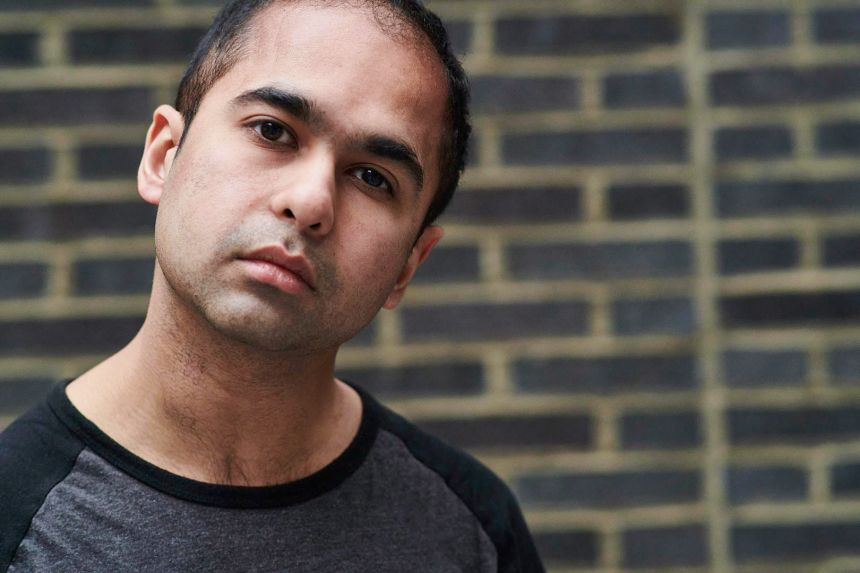
Juned is feeling a mixture of things. On the surface, he is calm, friendly, open and honest. But beneath it, a certain restlessness eats away at him in anticipation of the class he’s about to go to. He has dubbed his most recent theatre performance a failure and put an immense pressure on himself to set the record straight.
Mentally and emotionally, I’ve punished myself. I told myself: everything you’ve learned until now, scrap it. You’ve failed. Start again. It’s harsh the way I deal with these things. People tell me I need to take better care of myself.”
I
Juned grew up in London in a hostile family home.
‘Home is where the heart is.’ That’s usually what the catchphrase is. For me, it’s ‘Home is where the hurt is.’ — There was a lot of shouting. There was violence.
At 6pm every evening, Juned would sit down and watch The Simpsons — his only window into what happy family life would be like.
Juned grew up with a love of reading and writing just about anything, from fiction, to comic books, to non-fiction and Kung Fu novels. At the age of ten, story writing became a serious endeavour.
A teacher once read my story and then looked at me and said ‘Do you know, Juned, that you are one of the smartest students that I’ve ever had?’.”
Aged 13 at school, Juned took his first drama class.
“I’m not sure quite what happened but one moment I was terrified and the next I had discovered for myself that I enjoy drama — at least, that was the first time I actually enjoyed being terrified in front of an audience.”
Despite the lack of praise for his creative efforts at his family home, Juned’s ability to act blossomed over the course of secondary school. And by taking part in school plays, he fell in love with theatre.
But by the time he reached the crucial, final stages of UK education, Juned’s exams went catastrophically badly.
His family, who had never given him the necessary early support and encouragement, were even less inclined to help him in his quest to become an actor now. And the experience of failing in his A Levels was so brutal for Juned that he felt it was best to quit acting altogether.
It’s something that’s haunted me in my family life over the past 10 years. I felt guilty; I felt like I had let my parents down and destroyed their dreams. In Asian culture, it’s the eldest son who carries the torch forwards and looks after their parents.”
II
Ten years have passed during which time Juned has tried to move on from the failure of his exams.
Juned began working part-time as a library assistant at British Library. But as time went on, he began to feel less and less satisfied with his everyday life.
After some months in the working world, Juned picked up Taekwondo – it had been an interest of his for a long time, and he hoped it would be something that could give his life meaning.
Then one day, at a time when he was still emotionally punishing himself with the weight of having let his parents down, Juned’s family decided that they would go on a Holy Pilgrimage to Mecca.
Juned discussed the trip’s significance with friends in preparation.
One friend told me that going to Mecca is about finding your own personal relationship with God. Another friend told me that if you go to the Holy Shrine and ask for forgiveness, everything you’ve ever done will be forgiven. And I asked a cleric ‘Will God truly forgive me if I ask for it?’ and she said ,’Yes, of course – for you to ask for forgiveness and then God not give it to you, God would have to be shy.'”
For six months prior to going, Juned spent his lunch breaks going through all the old Quranic texts that he had forgotten.
The day came when he was standing before the Holy Shrine in Mecca.
I just remember standing at the shrine and my eyes just exploded with tears. I prayed: ‘Please, if you forgive me today, I’ll commit to becoming a better person, a better human being. I’ll do everything you say.'”
Juned returned home with a refreshed set of goals for how he was going to go tackle the coming years. His main goal was to develop a skill that he could as the basis for, as he saw it, a meaningful life.
Juned made friends with a young woman, M. Connecting over their shared love of drama, Juned and M. began to explore storytelling together. Juned told M. his ideas, and M. convinced Juned that they would make good stories for films.
Right around the time Juned met M., he had been dabbling in a story screenplay for a horror movie. Juned got so into the movie (about an American journalist who is investigating a series of murders taking place around his city) that he began to learn to play the role of the main character. Something bizarre happened. Juned over-practised his American accent to the extent that he began to find it uncomfortable to speak with his English accent.
I’m trying to get my British accent back. Usually when I’m quite tense or stressed, speaking with my boss, I refer back to my British accent. When I’m speaking in my American accent, it means I’m quite relaxed. My accents tend to change with my mood.”
Juned had been steadily advancing in Taekwondo, and eventually, after a great deal of hard work, gained his first dan black belt. But the success did not give Juned the euphoria he thought he was working towards.
I had waited so long for the day and when I finally got it I didn’t feel redemption. I felt nothing. I felt like a fraud. I was just holding my black belt in my hands and I was basically crying.”
Juned realised that he did not have everything he needed in his mental suitcase. He was slipping, slowly, into depression. Seeking professional help, Juned began seeing a therapist.
Juned’s therapist asked him to keep a journal of his emotions. But not wanting to write about himself directly, Juned embedded his emotions into characters in a series of short stories.
Juned was supported by M., too. And when M. founded an open mic, spoken word night at Ziferblat, the creative social space in Shoreditch, East London, she invited Juned along to read his short stories. It took some time, but eventually Juned began going.
The thing is, I say that I enjoy writing but at the same time I don’t really enjoy writing. When I write, I’m writing because of feelings of rage, despair or sadness. Even when I write something happy there’s like a sinister layer at the bottom. When I sit down at my laptop to write a short story, I know that I’m troubled, or on the verge of some kind of anxiety attack. It’s a way to basically deal with it.
When I sit down to type, it’s like my fingers move all by themselves. The story forms by itself. I literally make it up as I go along. There’s no planning or anything like that. I finish it and I’m actually quite horrified by the end product. Then I go to Ziferblat and I recite it. And I’m quite surprised that people enjoy my misery, that they’re having fun, and that there’s even a comedic element to the writing. So it’s quite funny how your emotions can create something like that.”
Juned typed every evening for four hours. One evening he even typed for eight hours. Before he knew it, he had come up with a 250-page novelised play about a manic-depressive who is convinced that he is the real Johnny Depp, and who meets a couple that he is convinced is the real Jennifer Connely and Paul Bettany. The three begin to have a devastating effect on each others’ lives.
I think writing was the one thing that prevented me from putting myself in any physical harm because those thoughts were there. I wanted to write the story because I wanted to find out how it was going to end. The play was the most painful thing I ever wrote.”
Then one day in 2016, when Juned had just about stabilised his emotional landscape, he fell out with another friend to the extent that the two could no longer speak to one another.
Juned entered the deepest stage of his depression.
— I do have to apologise — I suppose when you came here, you were expecting me to be full of energy.
(Juned is talking with his English accent.)
“I want to set the record straight. I don’t consider myself creative; I don’t consider myself as an artist. The stuff I do on stage, and in my drama class, and at Ziferblat, is just how I deal with my feelings. When you keep those feelings inside, it turns into misplaced anger and rage. It blinds you and it hurts.
“Like I said, I’m not very good at interviews. I hope this is not filler. I hope you are getting what you need from me. –“
Retreating a little from the fray, we agree to take a five-minute break from the interview.
The things I’m telling you are really personal. They are things I wouldn’t even have told my therapist a couple of years ago. When I was telling you about Mecca, I did start welling up. It’s uncomfortable — but I do need to be out of my comfort zone. So I appreciate you taking the time out to speak to me today.
III
Juned enrolled in a drama course at City Lit College. The decision to take the course was an entirely necessary move. He knew little else he could do to get out of his deepening depression.
Going to his first class, to his surprise, Juned received heartfelt praise from his classmates and teacher. In one class, Juned played The Joker.
I heard people roar with laughter and applaud. They were actually applauding my work. My teacher was gobsmacked at what I did in class. And to play The Joker in front of 25 people – it was almost a dream come true.”
In 2017, Juned won two awards at the Anna Scher Theatre Society in East London, one of which was Best Actor. The moment was inspiring, and filled Juned with greater confidence in his ability.
Juned realised he was onto something.
Creative Londoners: What’s your dream aspiration now?
Juned Ahmed: I think my dream aspiration is to write a good horror screenplay and turn it into a feature film. I think horror movies are quite B-graded these days. They’re not taken particularly seriously. They’re usually independent and remain relatively unknown. A list celebrities won’t lend their name to horror movies. Gone are the days when we had films like Shining or Hell Raiser, when proper actors were investing their time in horror. I want to put life back into that franchise. I want to create a screenplay that’s genuinely terrifying. On a Friday night, when I’m scouring Putlocker to watch a good horror film, I can never find anything – I have to really nit-pick. Horror movies should be taken more seriously. It’s easy to extract from our own tragedies and turn them into horror movies. The ghost and monsters in successful horror movies are like embodiments of our own insecurities. That’s why horror’s interesting to me.
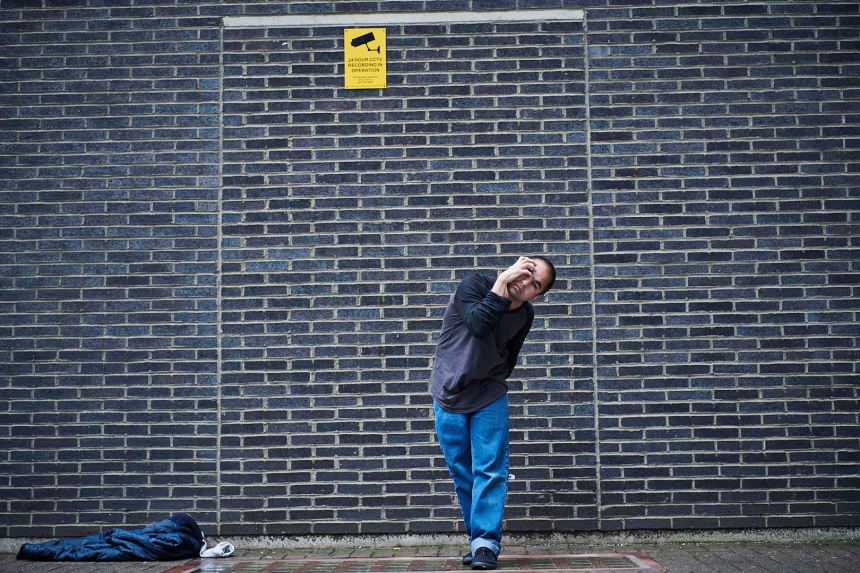
My greatest dream is to be in a proper film shown in mainstream cinema. If that happens, I’ll feel like I’ve found my purpose in life and that I’ve redeemed myself. I won’t know until then who I am. That’s what I’m struggling with – finding out who I am exactly.
That’s why I’ve come to this interview. I’m hoping it’s a small step in me finding my direction. It’s a step. But hopefully, it will help me. One of my biggest securities is that I’ll wake up old and with nothing – and not because I’ve failed, but because the things I had set out to do I was never meant to anyway. I’m taking it one day at a time.
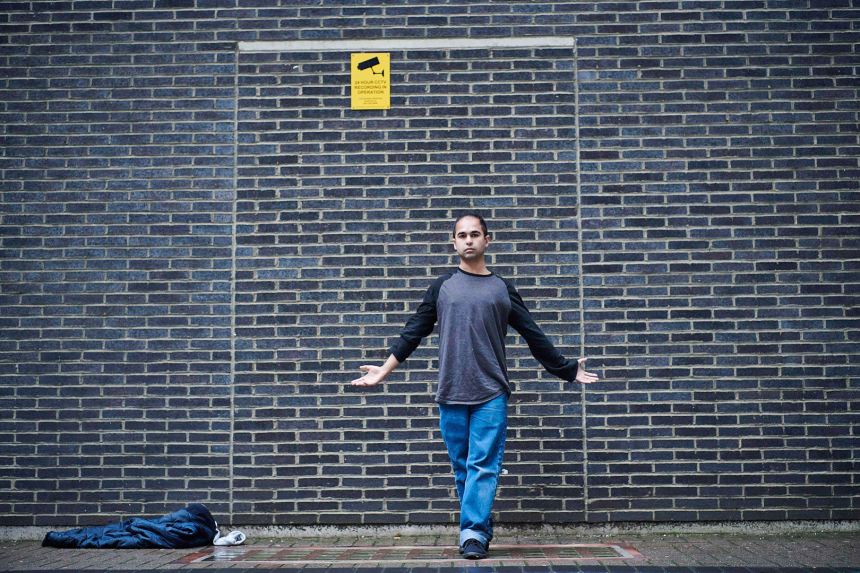
There’s a line that separates acting from real life. What I’m trying to do is blur that line. What one of my drama teachers said was that in acting, “acting” is actually the worst thing you can do. What you need to do is be as natural and genuine as you can. That way your performances are not pretentious or anything like that.
I’ve met so many bullshitters in my life that I’m so afraid that I might be one as well. That’s why I think twice, three times, even a hundred time before I claim something.
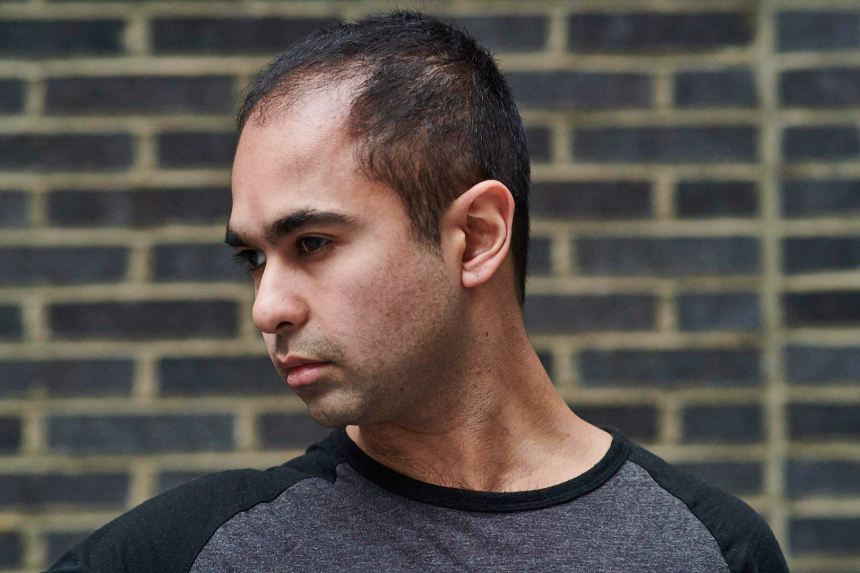
I act and I perform. When you get on that stage to act, you have to risk being vulnerable. You have to sometimes become the victim. I’ve seen it for myself. Not everybody is comfortable with doing that. There was this one actor who didn’t want one of the acting exercises, so he quit. During a performance, you have to put yourself out there. My therapist said it’s time I put myself out there and I don’t think I should cower away from that right now. I think “Juned” can be an interesting person and I think he wants to tell his story to people as well.
Juned goes off to class.
Photographs by Michael Wayne Plant, a London-based social documentary photographer.

 Creative Londoners